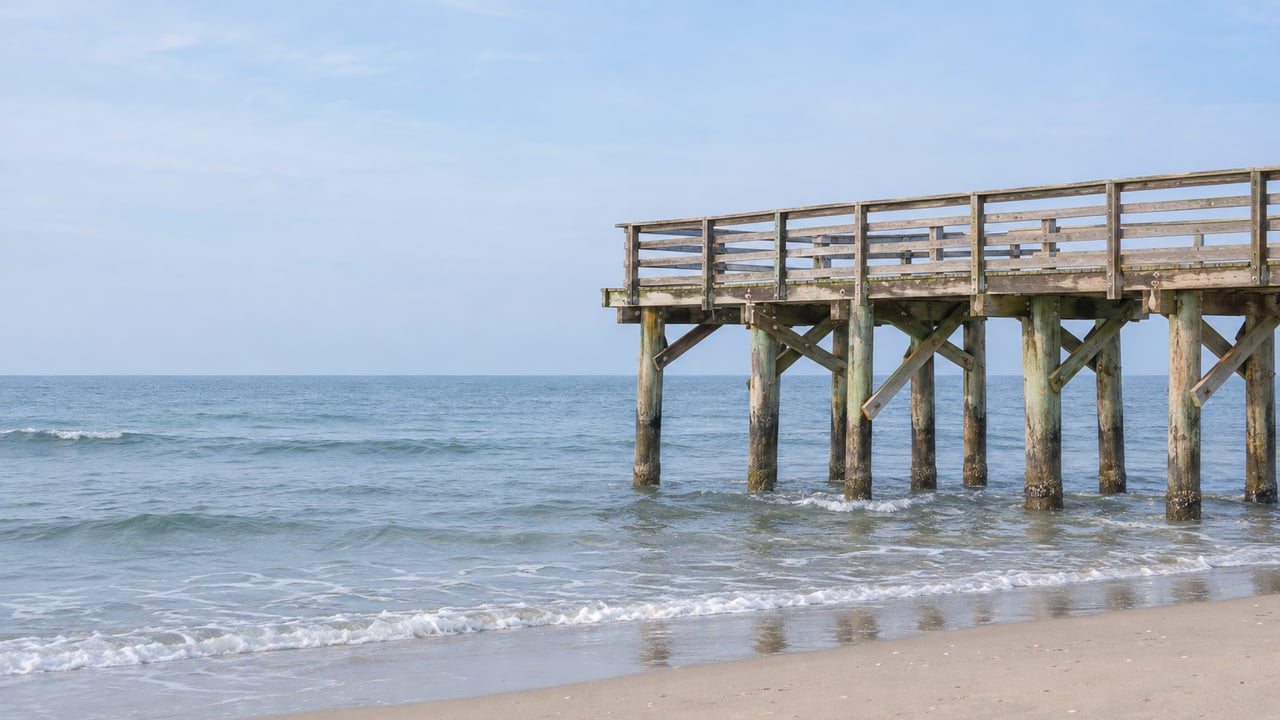
"The best way to protect it is never sell it." Planning board member David Purser said that in June. The board had just spent an evening on the town-owned pier complex at 705 Ocean Drive, the Oak Island Pier, which many people still call Yaupon Pier, and the event building next door. According to Port City Daily's account of that meeting, his colleague Barbara Textoris put it more simply: "We need to protect it. We need to protect that area."
Four months later the same board came back with its answer. It's a new zoning district written mostly around what already stands on the pier. On October 27 the Oak Island Planning Board unanimously recommended a "commercial waterfront district" for the pier and the 801 Ocean Event Center. The only uses it allows are restaurants without a drive-thru, including restaurants with outdoor seating, plus bait and tackle, a commercial pier and an event center. Port City Daily reported that the board decided "fewer allowances at first would be a more thoughtful approach."
That short list is deliberate. In North Carolina, a use added to a zoning district is hard to remove later, so the board started small.
What stands on the pier today
The complex is a small cluster of businesses, and the proposed district lines up closely with it. The Town of Oak Island's pier page describes it this way:
- The Oak Island Pier. It's 27 feet high and 880 feet long, with 30 king fishing stations. The Town lists it as North Carolina's highest pier. Walking it is free. Fishing passes come in daily, 3-day, 5-day, 7-day and annual versions, with discounts for seniors 55 and older and for active military and veterans.
- The Pier House. It sells fishing passes, frozen bait, tackle, snacks, ice cream, soft drinks, beer and wine, and souvenirs.
- Ruby's Coffeehouse. It lists its address as 705 Ocean Drive, on the pier, and posts hours of 7 a.m. to 2 p.m. Monday through Saturday and 8 a.m. to 2 p.m. on Sunday.
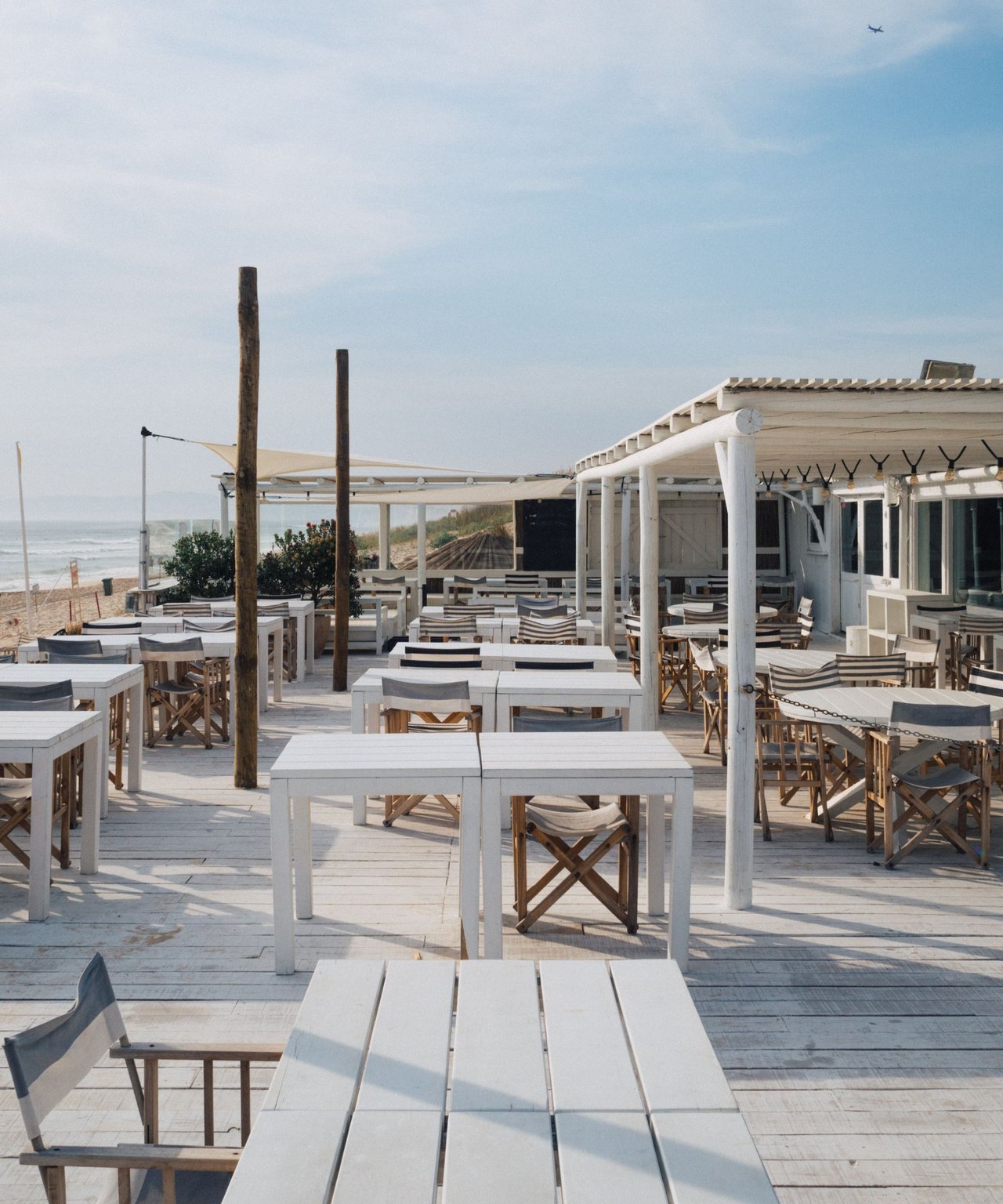
- KoKo Cabana. Also at 705 Ocean Drive, it posts hours of 11 a.m. to 8 p.m. on weekdays and 10 a.m. to 8 p.m. on weekends, with brunch until 2 p.m. on Saturday and Sunday.
- The 801 Ocean Event Center. A 6,000-square-foot event space next to the pier.
The pier is open every day of the year, and the Town says it keeps shorter hours in fall and winter. The Town's pier page is the place to check before an early or late visit.
The pier and the event center came to the Town at different times. The Town acquired the pier in 2009, making it the first municipally owned pier in North Carolina. A private operator ran it for nearly a decade. After the Hurricane Matthew rebuild was finished in 2019, it reopened under the Town's own management. The event building came in a 2018 land swap. Both the building and the pier date to 1955, before Oak Island was incorporated. A previous owner started hosting weddings there in 2015, and that use was grandfathered in as the Town kept running it as an event space.
The first attempt asked for much more
The narrow district grew out of a broader request that failed twice. Both parcels are zoned commercial recreation, which Port City Daily described as a more restrictive district "specifically designed to protect the oceanfront aesthetic and access." Town staff wanted them rezoned to community business, which allows a much wider range of retail and restaurants. Staff said the change would support "job creation and enhancement of the Town's tax base." That matters on an island where most town revenue comes from property and occupancy taxes and little land is left to build on.
The plans are older than this year. According to the same report, the Town planned a decade ago for the complex to include restaurants, retail, an arcade and more. Planning Board Vice Chair Durral Gilbert listed the paths the Town could take: "Public-private partnership, land lease, you could sell it."
The trouble with community business was everything else it allows. If the land were ever sold or leased, that zoning could permit fuel and convenience stations or residences. "We don't want a gas station there. You know what I mean?" Gilbert said, as Port City Daily reported. "We don't want veterinary clinics with kennels." Board members also asked whether rezoning could weaken the conservation easement on the pier. Their concern was that a future buyer could argue the pier made other plans for the property impossible. Town attorney Lydia Lavelle called the easement "pretty strong" but said she'd need to research the question further. The board denied the rezoning unanimously on June 30.
The request went to Town Council for a public hearing in October, and council denied it too. Council sent the question back to the planning board and suggested a new district.
Three options, and why the board chose a new district
At the September planning board meeting, Craig Harmon, Oak Island's new director of development, laid out three options. One was the general rezoning that had already failed. Another was conditional zoning, which would require a professionally sealed master plan costing $15,000. The third was a district written from scratch. Gilbert backed the third. According to the board's September 29 meeting notes, as reported by Port City Daily, he said it would let the Town "define appropriate by-right uses, expand or restrict them as development interest materializes, and protect the public interest in these unique oceanfront parcels."
Here is how the three proposals compare:
| Community business, denied | Board's June preference | Commercial waterfront, recommended Oct. 27 | |
|---|---|---|---|
| Restaurants | Yes | Bars, coffee shops, food trucks | Restaurants without drive-thru, outdoor seating allowed |
| Retail | Wide range | Specialty retail, convenience stores | Bait and tackle only |
| Pier and event center | Not the focus | Commercial piers | Commercial pier, event center |
| Residential | Allowed | Seen as undesirable | Excluded |
The October list is shorter even than the board's own June preferences. Cafes, coffee shops and bakeries were on the list when the October 27 discussion began. Board member Bob Carpenter said the board could always come back and add more uses later through a text amendment. Staff also recommended banning drive-thrus, heavy industry, outdoor storage yards and auto repair shops.
Why the list started short
Carpenter explained the caution at the October meeting: "If we add something to the table of uses, we can't take it off later because that's considered downzoning." Port City Daily reported that Senate Bill 382, passed by the General Assembly in 2024, bars a local government from downzoning a property without the written consent of all its owners. Downzoning can include reducing permitted uses.
Michael Bowen of The Brough Law Firm, advising the board, explained what that means here, as the same Port City Daily report recounts. "If the town owns the land, it can downzone however it would like. It has its own consent," he said. If the Town ever sold the parcels, the zoning would pass to the new owner. Harmon told the board the properties would "likely" carry restrictive covenants in that case. Carpenter answered, "'Likely' isn't the same as 'they will.'"
So the short list does its real work only if the land changes hands. While the Town owns the pier, it can tighten the rules whenever it wants. A short list written now limits what any future owner could put on the oceanfront without asking for new uses first. At the end of the October meeting, Port City Daily reported, council member Bob Ciullo said council was "emphatically" not interested in selling the pier.
How the board defined a bait shop
The most detailed part of the October meeting was about the Pier House, and about how to define a bait shop. "Bait and tackle" isn't defined in the town ordinance. Board members worried that a loose term like "specialty retail" would let in convenience stores or smoke shops that happen to sell hooks. "Where there is a gray area, there is a loophole," Bowen said, according to Port City Daily. The board then debated whether "primarily bait and tackle" should be measured by sales or by inventory. Bowen pointed out that seasonal shops would have skewed numbers, and he asked who on town staff would enforce it.
According to Port City Daily, the definition that passed unanimously says:
"retailers of fishing supplies, miscellaneous beach supplies, products and food sundries, suitable for a family-friendly environment."
That wording covers what the Pier House sells today: tackle, sundries, snacks and souvenir shirts. Bowen suggested the "family-friendly" phrase on purpose, so that board and council could decide later what it means. "We don't know what's going to be legal in 10 years," he said.
The district could spread along the waterfront
The board wrote the district with the pier in mind, but it doesn't have to stay there. As Port City Daily's coverage describes, property owners can ask to be rezoned into it. Board members talked about the marinas and restaurants along the Intracoastal Waterway, and about whether watercraft rentals, sightseeing tours and fishing charters might fit someday. Alternate member Gene Brooks objected to beach jet ski rentals: "It's an accident waiting to happen." Gilbert used the waterway pub Lone Rider as an example of a property that would lose flexibility in the new district, because its current commercial recreation zoning allows residential and the new district doesn't. He added that "we, and town council, can take these exceptions one at a time."
What comes next
Before anything changes, Town Council has to hold a hearing on the district and vote on it. The published agenda for council's November 10 meeting at 6 p.m. listed a report from the UNC-Chapel Hill Development Finance Initiative on a study the Town commissioned in May. It also listed a proposed branding and wayfinding committee. Agendas and meeting dates are posted on the Town of Oak Island's meetings page.
Until council acts, the pier keeps running as it does now. The coffeehouse opens at 7 most mornings, and fishing passes are sold at the Pier House counter. This post summarizes local zoning news for general information only and isn't legal advice. Property owners with questions about how a zoning change affects them should talk with a qualified professional.
If you're curious how a decision like this pier zoning could affect the part of Oak Island where you live, Vic R Rosado is glad to talk it through, with no pressure. Contact Us anytime.