Wondering where to focus your Oak Island home search? In 28465, one address can put you steps from the sand, while another gives you a quieter waterway setting or a more residential feel with easy access to both. If you are comparing Oak Island beach and waterway areas, this guide will help you understand how the island is laid out, what the main micro-locations feel like, and how current price ranges stack up so you can narrow in on the right fit. Let’s dive in.
How Oak Island Is Laid Out
Oak Island has a simple grid that makes it easier to compare locations once you know the basics. Beach Drive and Ocean Drive serve the beachfront side, while Yacht Drive and Elizabeth Drive serve the Intracoastal Waterway side. Part of Oak Island also extends onto the mainland along Middleton Boulevard and Long Beach Road, so listings with the same 28465 zip code can offer very different day-to-day experiences.
That layout matters because your lifestyle may depend less on the zip code and more on which side of town you choose. A home on the ocean side can feel very different from one near the waterway, even if both are only a short drive apart. For many buyers, the right choice comes down to how you want to spend your mornings, evenings, and weekends.
Oak Island Price Snapshot
Current islandwide pricing generally centers in the mid-$500,000s to mid-$600,000s. Reported market snapshots show average or median values around $576,291 to $598,642, with a median listing price around $665,000. These numbers are best used as broad comparison points rather than exact pricing benchmarks.
Within that bigger picture, micro-location still drives a lot of value. Oceanfront homes typically sit at the highest tier, second-row homes often offer a strong middle ground, interior-island homes cover the broadest value band, and waterway properties can range widely depending on whether they are canal-front, marshfront, or directly on the Intracoastal Waterway.
Oceanfront Homes: Maximum Beach Access
If your goal is the most direct beach lifestyle possible, oceanfront is usually the top choice. These homes offer immediate sand access, open water views, and the strongest vacation-home feel. Current and recent examples in this segment have ranged from about $1.095 million to $1.92 million.
That premium buys more than just scenery. It also puts you closest to surf, wind, dunes, and active beach management areas. Oak Island’s 2025 and 2026 beach nourishment project covered the full length of town limits, and the town emphasizes using designated access points rather than crossing dunes.
Who Oceanfront Fits Best
Oceanfront tends to fit buyers who want the beach as the center of daily life. If you picture stepping out for sunrise walks, hearing the ocean from your deck, and prioritizing direct access over extra separation, this segment may feel worth the higher price point.
It can also appeal to second-home buyers who want the classic coastal setting. Still, it is smart to balance that dream with practical review of flood information, beach access rules, and the level of exposure you are comfortable with.
Second-Row Homes: Views With More Buffer
Second-row homes often hit a sweet spot for buyers who want strong beach access without paying full oceanfront pricing. Recent and current examples have ranged from about $665,000 to nearly $1.5 million, which shows how much lot size, updates, and view quality can affect value.
Many second-row properties still offer water views from decks and quick access across the street or just a short walk away. For some buyers, that slight buffer creates a better day-to-day balance. You stay close to the beach while gaining a little more separation than the front row typically offers.
Why Buyers Often Start Here
This is one of the most practical places to begin if you want a beach-first lifestyle and still want flexibility on budget. Compared with oceanfront, second-row can offer a more favorable compromise between cost, views, and convenience.
It is also a helpful category if you are comparing a future retirement home with a second home. You may find that immediate beach access still feels easy, while the setting offers a touch more privacy and a little less direct exposure.
Interior-Island Homes: Broadest Range and Flexibility
Interior-island homes usually provide the broadest value band on Oak Island. Current listing snapshots have shown homes roughly in the $450,000 to $747,000 range, placing this segment closer to the islandwide baseline and below many direct-water options.
These areas often feel more residential in day-to-day life. You are generally less exposed to direct surf conditions, and many buyers appreciate the added privacy and easier everyday routine. At the same time, Oak Island’s grid layout keeps Beach Drive, Ocean Drive, and Yacht Drive straightforward to reach.
Why Interior Locations Appeal to Many Buyers
If you want Oak Island living without centering your budget on direct waterfront positioning, the interior can be a strong fit. You can still enjoy the town’s public beach access network, parks, trails, and water-related amenities while keeping more options open on home style and price.
This segment often works well for buyers who plan to live on the island full time. It can also appeal to relocators who want a coastal setting with a more settled residential rhythm.
Waterway Areas: Best for Boating and Paddling
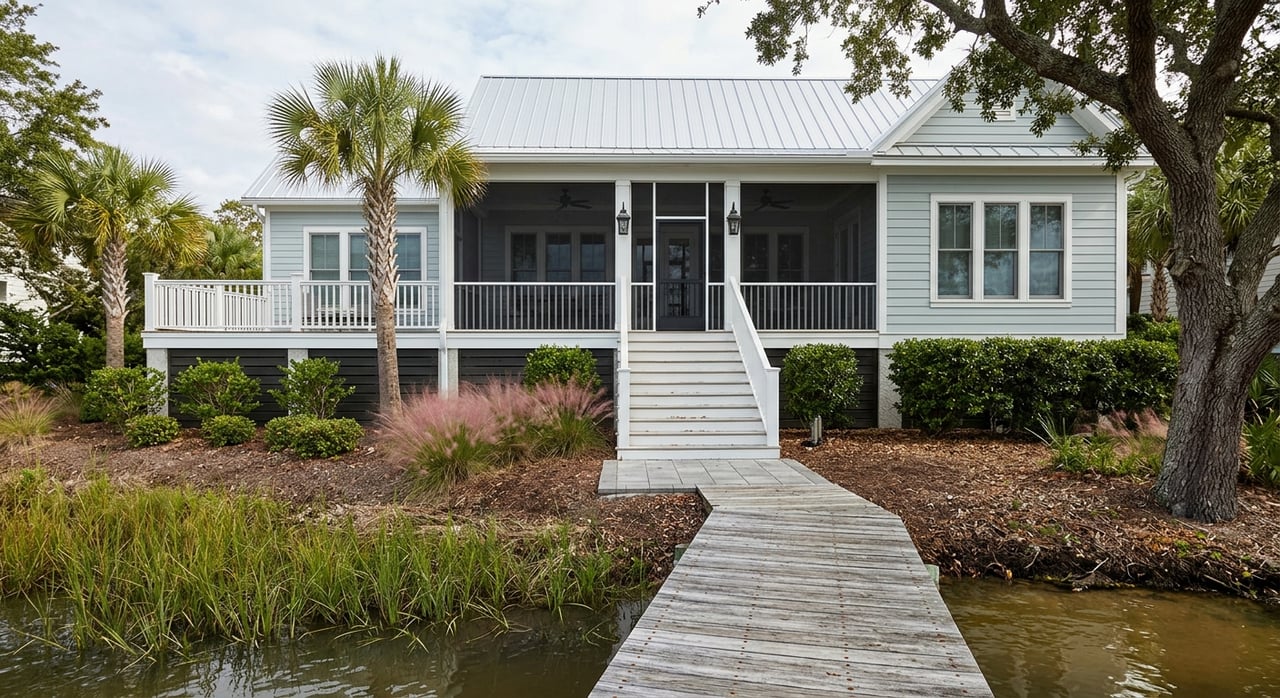
Waterway-adjacent homes are a different kind of coastal experience. Instead of focusing on direct beach frontage, these locations often appeal to buyers who care most about boating, fishing, kayaking, marsh views, or dock-oriented living.
Pricing in this segment varies widely. Current examples range from about $475,000 to $1.7875 million, with canal-front and Intracoastal Waterway-front properties often occupying very different tiers.
What Makes Waterway Living Distinct
The town’s amenity map highlights floating docks, kayak launches, water-access stairs, and the Davis Canal area, all of which support an active on-the-water lifestyle. Town maps also specifically recommend Yacht Drive and Elizabeth Drive for riding along the Intracoastal Waterway side.
For the right buyer, that daily experience can feel just as compelling as the ocean side. You may trade direct beach frontage for boating convenience, calmer water views, and a layout that better supports fishing or paddling.
Beach Access Matters More Than You Think
When you compare Oak Island homes, it helps to look beyond straight-line distance to the ocean. The town has 65 public beach access locations, about 23 emergency vehicle access points, and 1,489 parking spaces across those accesses. Seasonal paid parking is enforced in designated beachfront zones from April 1 through September 30.
That means a home a little farther from the ocean can still work well if access is simple and convenient for your routine. It also means buyers should pay attention to parking patterns and local access rules, especially if you expect frequent guests or plan to visit the beach at peak times.
Amenities Can Shift Your Priorities
One of the most helpful parts of choosing between Oak Island micro-locations is understanding how much the town offers beyond direct oceanfront living. Oak Island lists amenities including the pier, The Point, floating docks, kayak launches, fishing tees, parks, trails, the Recreation Center, the Nature Center, and the Ocean Education Center.
Because of that, an interior or waterway-adjacent home can still feel very connected to the coastal lifestyle. If you love time outdoors, access to paddling, fishing, walking trails, or public gathering spots may matter almost as much as your exact distance from the sand.
Flood Review Should Be Part of Every Search
No matter which segment interests you most, it is smart to review flood information early. Oak Island identifies the Atlantic Ocean, the Intracoastal Waterway, Davis Canal, Montgomery Slough, and the Elizabeth River as flood-relevant water bodies, and the town provides guidance for checking flood maps and address-specific flood zones.
This is especially important when you are comparing homes that may look similar on price but sit in different settings. A careful location review can help you better understand the property’s context and make a more confident decision.
A Simple Way to Compare Oak Island Areas
If you want the cleanest shorthand, think of Oak Island this way:
- Oceanfront: maximum views and direct beach access at the top price tier
- Second-row: strong beach access with a view-and-value compromise
- Interior island: broadest budget range and easier day-to-day living
- Waterway-adjacent: best fit for boating, docks, fishing, and paddling lifestyles
That quick framework can save you time as you sort listings. It also helps you focus on the lifestyle you want first, then match that vision to the most suitable part of Oak Island.
Choosing between Oak Island’s beach and waterway areas is really about matching the property to your version of coastal living. Whether you want front-row beach access, a quieter interior setting, or a home that supports life on the water, the right fit usually becomes clearer once you compare both lifestyle and location side by side. If you want a local guide to help you narrow the options and make sense of Oak Island’s micro-markets, reach out to Vic R Rosado.
FAQs
What is the difference between oceanfront and second-row homes on Oak Island?
- Oceanfront homes offer direct beach frontage and usually sit at the highest price tier, while second-row homes often provide strong views and quick beach access with a little more buffer and a wider range of pricing.
Are interior-island homes on Oak Island still convenient to the beach?
- Yes. Oak Island’s grid layout and public beach access network make many interior locations convenient to the beach, parks, and other town amenities even without direct waterfront positioning.
What makes waterway homes in Oak Island appealing to buyers?
- Waterway-adjacent homes often appeal to buyers who prioritize boating, fishing, kayaking, marsh views, canal access, or proximity to floating docks and launch areas.
How much do Oak Island homes cost in different micro-locations?
- Recent snapshot examples show islandwide pricing in the mid-$500,000s to mid-$600,000s, with oceanfront often above $1 million, second-row spanning a wide middle range, interior homes often around $450,000 to $747,000, and waterway homes ranging from about $475,000 to $1.7875 million.
What should buyers check besides distance to the beach in Oak Island?
- Buyers should also review public beach access points, seasonal parking rules, nearby amenities, and address-specific flood information when comparing Oak Island homes.